
Travel Guide
Southeast Asian tourism embraces ‘shared ground’ planning as local weather, overtourism pressures surge
Oct
The publish Southeast Asian tourism embraces ‘shared ground’ planning as climate, overtourism pressures surge appeared first on TD (Travel Daily Media) Travel Daily Media.

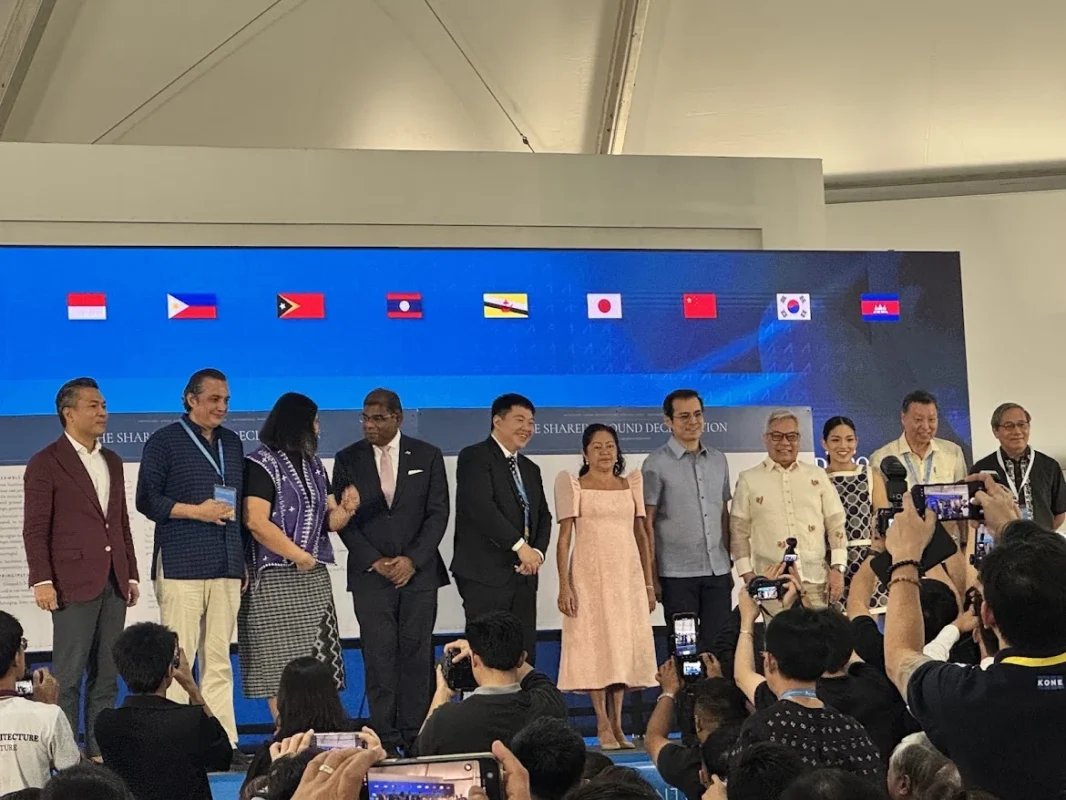
Earlier this month, we had the chance to attend the 2026 version of Anthology, the ASEAN architectural pageant, within the historic district of Intramuros in Manila.
This yr’s pageant revolved across the theme Shared Ground, prompting discussions on the structure of care, tradition, and the collective way forward for Southeast Asia and past.
According to pageant founder and organiser William Ti Jnr: “Shared ground is a position that reframes architecture as territorial responsibility. The ground becomes the stage upon which competing ambitions play out. Every building touches this ground, and every building alters it. A basement changes groundwater behavior. A podium redirects pedestrian flow. A masterplan restructures access to light, air, and mobility.”
If we’re to use this notion to the follow of tourism on each regional and international ranges, the architectural idea of shared floor shifts the main focus from creating remoted, luxurious vacation spot objects to designing interconnected environments that embrace the local people, ecosystem, and regional geography.
Ti truly factors out that structure doesn’t finish at a property line: moderately, it acknowledges that the bottom in Southeast Asia and the remainder of the higher continent is layered, productive, and ecological.
As such, shared floor essentially reshapes how locations are constructed, skilled, and built-in into the host nation.

What precisely does the idea of shared floor entail?
In a hyper-globalised area like Southeast Asia, environmental and financial impacts refuse to cease at nationwide borders.
With regard to the shared floor strategy, it recognises {that a} coastal intervention or infrastructure growth in a single territory alters the circulation of capital, labour, and water programs in one other.
For tourism professionals, it’s a realisation that cross-border tourism corridors just like the Mekong sub-region have to be designed collectively.
A shared floor mentality ensures that constructing a cruise terminal or high-speed rail hyperlink considers regional provide chains and migratory realities, shifting the paradigm from nationwide competitors to regional ecosystem preservation.

Not fairly the top of privatisation
The idea of exclusivity, particularly amongst mega-resorts, business enclaves, and gated mixed-use developments in Asia, have primarily sealed off native communities and prevented them from attaining the financial advantages of elevated commerce and foot visitors into the realm.
While the idea of shared floor doesn’t essentially name for an finish to privatisation (and, doubtlessly, gentrification), the precept promotes porosity, primarily edges the place the bottom stage stays a democratic layer.
Instead of separating travellers from locals, designs encourage civic change and extra open interplay.
Developments created alongside these strains characteristic open, communal hubs, public pathways, and shared backyards that serve as collective areas the place vacationers and neighborhoods naturally work together over meals, recreation, and tradition.
One such growth is Kernel Design’s The Ground Bangkok which was created as a dynamic group hub that helps life all through the day, accommodating a variety of customers and actions.

Where does environmental integration come into play in tourism structure and design?
Especially now that the world is bearing the brunt of local weather change’s worst results, the floor in Asia is especially friable, particularly due to brutal drought alternating with heavier monsoon rains, super-typhoons, and tidal surges.
In gentle of those environmental challenges, structure acts as a type of territorial accountability moderately than a static visible assertion.
This has resulted in resorts whose basic infrastructure is handled as interventions inside residing ecological programs.
Firms like WOHA Architects which has dealt with initiatives like Alila Villas Uluwatu in Bali and the Pan Pacific Orchard in Singapore; as nicely as VTN Architects in Vietnam prioritise mixing constructed varieties with topography, water retention grids, and native flora.
In their designs, tourism buildings actively take part in local weather resilience as an alternative of changing into an extra drain on native sources.
I had the chance to debate the matter with a senior Filipino inside designer who shared her ideas relating to environmental design in lodging and sights, and her concern entails making areas purposeful as shared floor moderately than merely aesthetic.
As she put it: “[In design,] the simpler the better. Instead of wasting the space with plants, put benches so that it won’t be wasted. There should be trees, not shrubs. Especially in certain areas, some fruit-bearing trees are popularly used in public spaces. For example, in Italy, along public walkways, you have orange trees which provide shade and those walking by can pick the fruit; nothing is wasted. Spaces, especially green spaces, must not be hard to maintain after a while.”

What does shared floor imply for heritage websites?
We can say that the shared floor precept brings aid, although not essentially serves as a panacea, to the results of speedy urbanisation and business tourism.
Too many individuals and ill-conceived growth have traditionally led to the demolition of heritage websites throughout cities like Yangon, Jakarta, and Penang.
Applying the precept of shared floor honours the historic layers embedded within the land, together with colonial grids, indigenous typologies, and sacred areas.
At the identical time, as an alternative of flattening regional id to assemble standardized trendy services, the idea champions the adaptive reuse of cultural landscapes.
By filtering vernacular structure via up to date design, it counters the commodification of native tradition, giving vacationers an genuine, deep sense of place rooted within the collective reminiscence of the host group.
The publish Southeast Asian tourism embraces ‘shared ground’ planning as climate, overtourism pressures surge appeared first on Travel Daily Media.
Source link
